
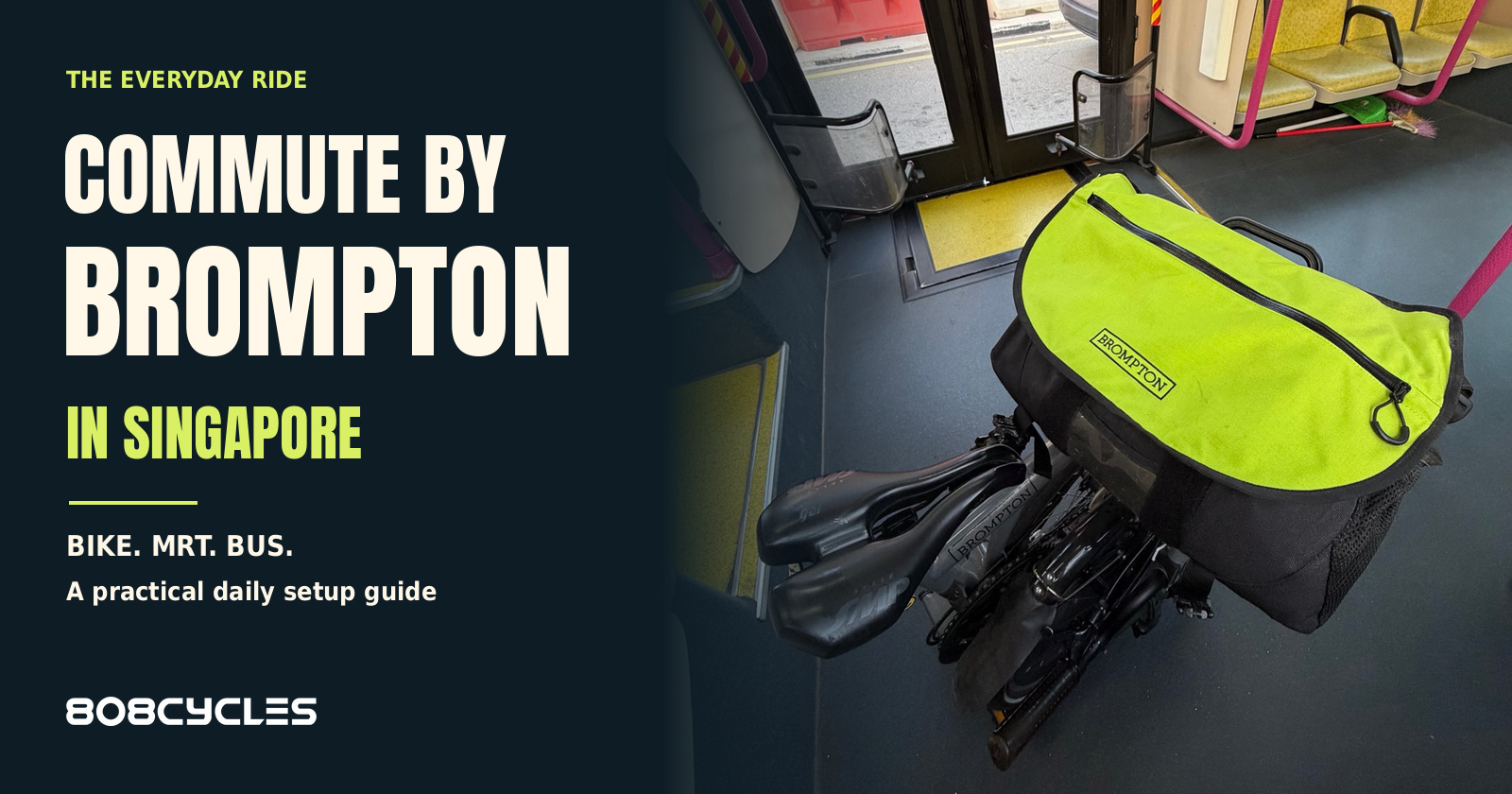
A practical Brompton commuting setup in Singapore should make three things easy: riding your usual route, carrying the folded bike when needed, and switching to MRT, bus, taxi or ride-hailing when plans or weather change. For most commuters, the essentials are the right model and gearing, front-mounted luggage, lights, basic rain preparation and a simple maintenance routine. Everything else should solve a real problem in your day.
This guide explains how to choose that setup without overcomplicating it. It is written for new buyers as well as existing owners who want to turn an occasional-use Brompton into a dependable daily commuter.
Quick answer: the best Brompton commuter setup for Singapore
- Bike: choose a C Line for familiar steel-frame value, a P Line if lower carrying weight matters, or a T Line if minimum weight is your top priority.
- Gearing: 4-speed suits flatter routes and lighter loads; 12-speed gives a wider range for slopes, longer journeys and luggage.
- Luggage: use a compatible front bag on the carrier block so the load stays off your back and does not interfere with steering.
- Visibility: fit dependable front and rear lights, and use reflective details for early or late commutes.
- Weather: carry a compact rain layer, bag cover or waterproof pouch, plus a cloth for wet contact points and wheels.
- Maintenance: check tyre pressure and braking regularly, keep the drivetrain clean, and address unusual noises or folding resistance early.
Why a Brompton works well for commuting in Singapore
The advantage is not simply that a Brompton folds. It is that the fold gives you options throughout the day. You can ride from home, take public transport for part of the journey, keep the bike beside your desk, put it into a taxi when rain arrives, or continue to an appointment without searching for bicycle parking.
That flexibility is especially useful in Singapore, where a commute may combine park connectors, neighbourhood streets, lifts, station entrances and office corridors. A compact bicycle can reduce the gap between cycling and the rest of your daily routine.
1. Choose the Brompton line around your real commute
C Line: a versatile starting point
The C Line is a sensible choice when you want a classic steel Brompton for regular riding and do not expect to carry it for long stretches. It is well suited to riders who wheel the bike most of the time when folded, store it close to their desk and value a straightforward ownership experience.
P Line: easier for frequent carrying
The P Line becomes attractive when your journey includes more stairs, station changes or walking with the folded bike. Its lower weight can make repeated transitions feel easier. Read our detailed Brompton C Line vs P Line comparison before deciding whether that carrying advantage is worth the additional spend for your routine.
T Line: prioritising minimum weight
The T Line is for riders who place a very high value on low weight and premium materials. It can make sense for frequent carrying or travel, but it is not automatically the best commuter for everyone. Compare the trade-offs in our P Line vs T Line guide.
2. Match the gearing to distance, slopes and luggage
A lighter, simpler setup is appealing, but gearing should be chosen for the hardest part of your regular week rather than the easiest five minutes of a test ride.
A 4-speed Brompton can be a good fit for flatter urban journeys, confident riders and lighter loads. A 12-speed offers a wider range for bridges, slopes, headwinds, longer distances or a fully loaded front bag. If you are undecided, our 4-speed vs 12-speed comparison explains the practical differences for Singapore riders.
3. Get the handlebar position and fit right
Your commuting posture affects comfort, visibility and confidence. A lower position can feel more direct and sporty, while a higher position may suit riders who prefer a more upright view of traffic and surroundings. Height alone does not decide the answer; flexibility, riding style and past injuries matter too.
Test the positions in the clothes and shoes you expect to use. Check that you can brake comfortably, turn your head without strain and ride for more than a short lap. Small setup details such as saddle height and angle can transform how the bike feels.
4. Use front luggage instead of carrying everything on your back
For many commuters, the front carrier block is one of the most useful parts of the Brompton system. A compatible bag clicks onto the frame rather than hanging from the handlebar, so the weight does not turn with the steering in the same way as a handlebar bag.
Choose capacity based on a normal workday: laptop, charger, water bottle, compact rain layer and personal items. Oversized luggage adds bulk every day, while an undersized bag encourages overpacking or a second shoulder bag. If you carry electronics, use a padded sleeve and protect them from sudden rain even when the outer bag is described as water resistant.
5. Set up for MRT and bus travel
Singapore’s Land Transport Authority allows foldable bicycles on trains and buses throughout the day when the folded bicycle is within the permitted size of 120cm by 70cm by 40cm. The bicycle should be folded before entering stations, interchanges and vehicles. Dirty or wet wheels should be wrapped, protruding parts covered, and the folded bike must not block aisles or doors.
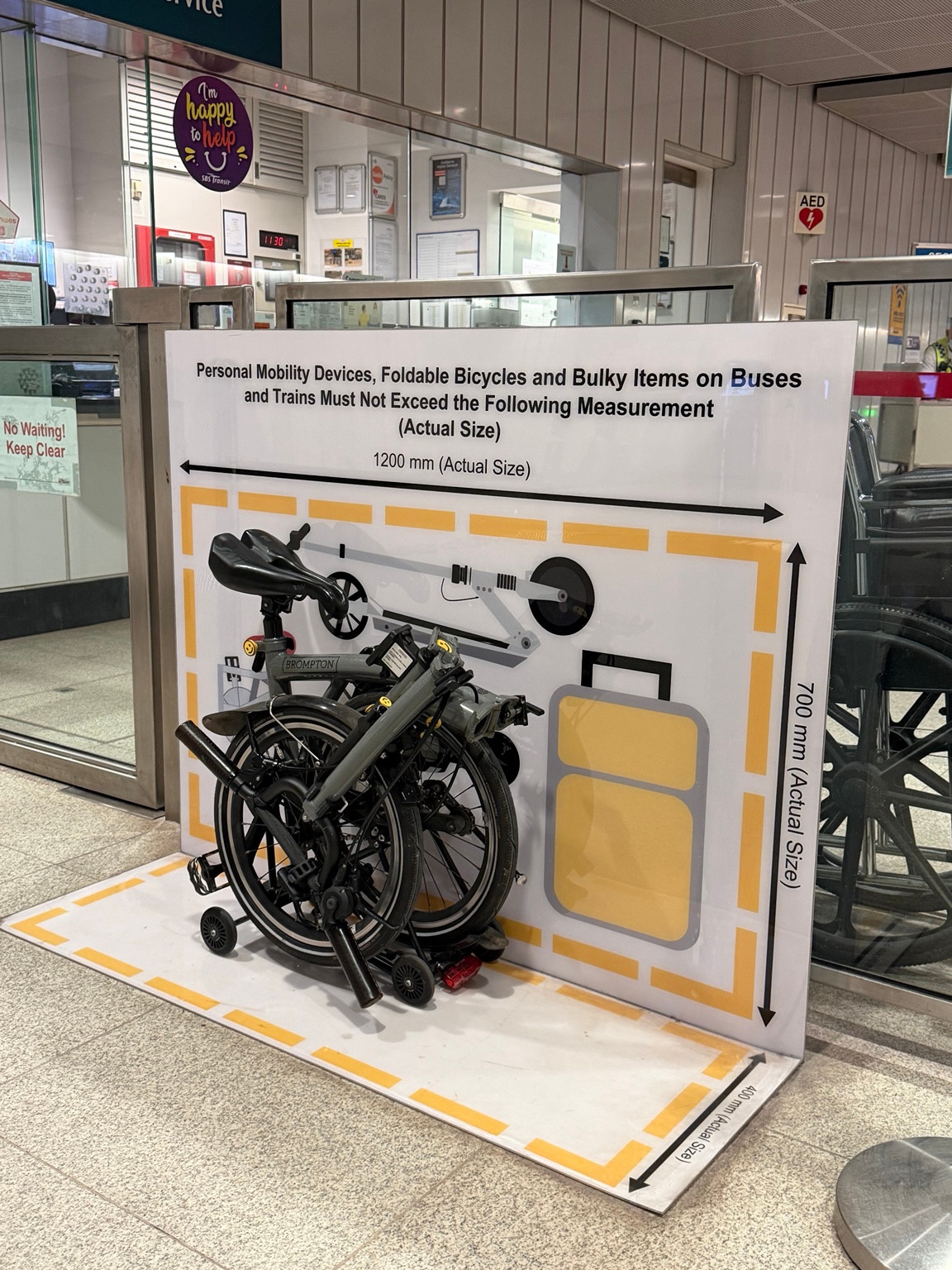
Use the first or last train car when it is less crowded, give other passengers space and be prepared to wait for the next service when conditions are busy. Always check the latest LTA guidance for foldable bicycles on public transport before relying on the rules for a journey.
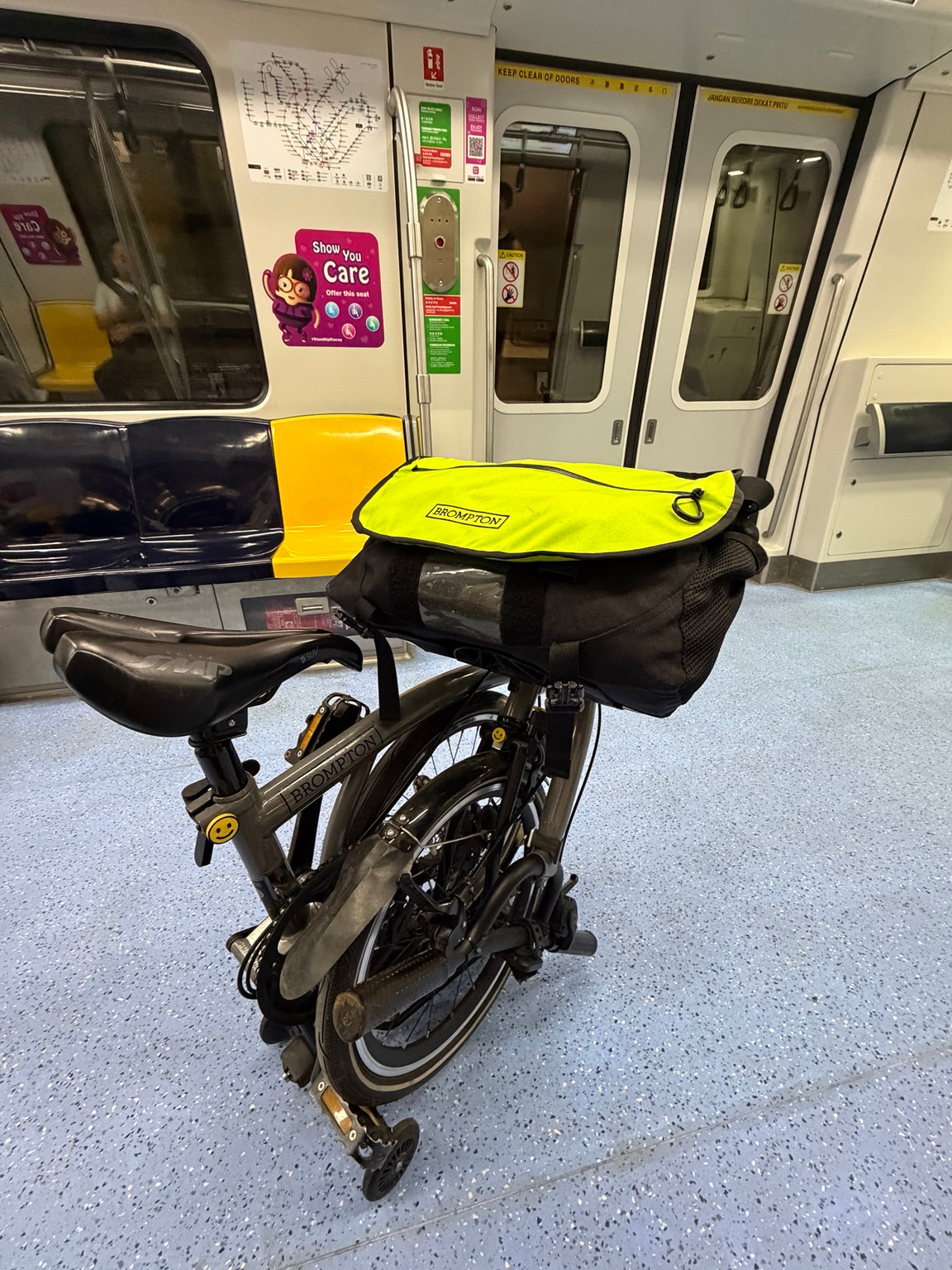
Practise the fold at home until it is calm and predictable. A rear rack with suitable rollers can make longer station transfers easier, but it is not essential for every rider. Our practical Brompton MRT guide covers the process in more detail.
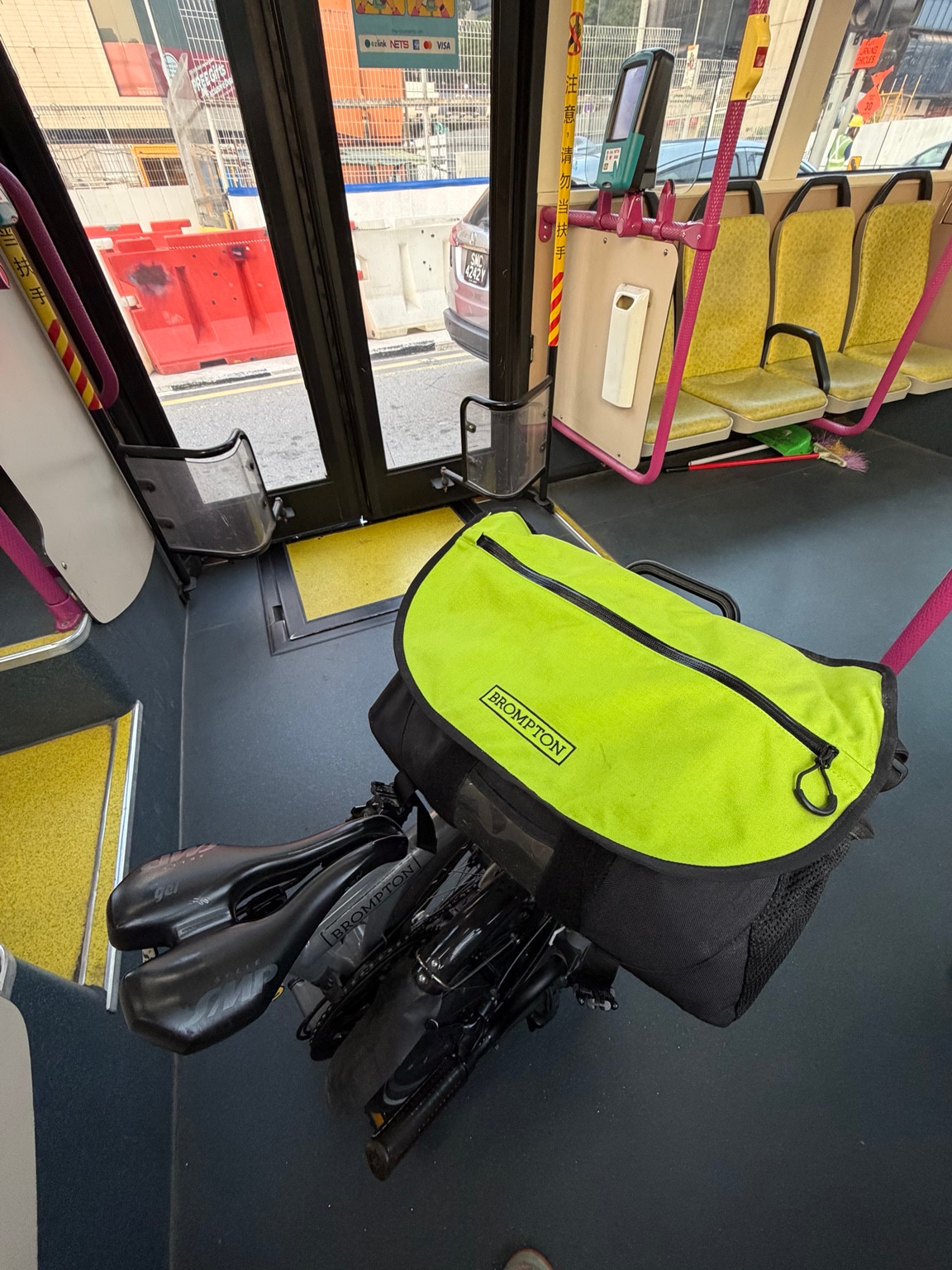
6. Prepare for heat and sudden rain
Singapore commuting is rarely only about distance. Heat, humidity and sudden showers shape what feels practical. If you want to arrive in work clothes, leave more time and ride at a pace that limits overheating. A small towel, spare top and deodorant can be more useful than an expensive performance accessory.
Mudguards help on wet roads. Carry a compact rain layer and a cloth or lightweight cover for the folded bike when transferring indoors. After a wet ride, wipe the bike down, let it dry in a ventilated place and pay attention to the chain and moving parts. Avoid storing it wet inside a sealed cover.
7. Make visibility and security part of the setup
Use reliable front and rear lights whenever visibility is reduced, including dawn, dusk, rain and shaded routes. Reflective details on your bag or clothing help other road users notice movement. A bell is useful on shared paths, but it does not replace slowing down and giving pedestrians space.
One benefit of a Brompton is that you can often take it indoors rather than leave it outside. Confirm your building’s policy in advance and keep the folded bike clean around shared spaces. If outdoor parking is unavoidable, use a suitable lock and minimise the time the bicycle is unattended.
8. Build a small commuter repair kit
You do not need to carry a workshop. A compact kit might include a spare tube, tyre levers, a compatible pump, a small multi-tool, disposable gloves and a little cash or a payment card for an alternative trip home. Learn how to identify a puncture and how to remove the affected wheel before you need to do it beside a path.
For longer rides, add a power bank and emergency contact details. Keep the kit together in one pouch so it transfers easily between bags.
9. Budget for the complete commute, not only the bicycle
Model prices and availability change, so use our live Brompton stock page for current Singapore pricing. Then budget for the items that solve real commuting needs: luggage, lights, weather protection, a pump, puncture supplies and scheduled maintenance.
A more expensive setup is not necessarily better. The goal is a bicycle you will use consistently. Our guide to the real cost of owning a Brompton in Singapore separates purchase price from longer-term running costs.
10. Follow a simple maintenance rhythm
- Before important rides: check tyre pressure, braking response, wheel condition and that the folding clamps operate normally.
- After wet rides: wipe the bicycle, dry it properly and inspect the drivetrain for dirt.
- Every week of frequent use: look for cuts in the tyres, unusual looseness, worn brake surfaces or new noises.
- Periodically: clean and lubricate the chain correctly, and arrange professional servicing according to use, conditions and component wear.
A bicycle used daily in rain and stop-start traffic may need attention sooner than one used occasionally in dry conditions. Do not wait for a small issue to become a failed component. If your bike has been stored for a long period, see our guide to servicing an unused Brompton.
A one-week Brompton commuting test
Before buying every accessory, test the routine for a week. Ride the actual route at the expected time, practise entering the office with the folded bike, carry a normal day’s luggage and try the public-transport transfer you expect to use. Note where the experience becomes awkward.
If the folded carry is the problem, compare lighter models or improve rolling. If your back gets hot, move luggage to the carrier block. If you run out of gears, reconsider the gearing range. If the bag is half empty, choose a smaller everyday option. Let repeated experience guide the setup.
Common Brompton commuting mistakes
- Choosing a model from specifications alone without testing the carry and fold.
- Selecting gearing for a short flat test route rather than the hardest regular journey.
- Carrying a heavy backpack when a front bag would make the ride more comfortable.
- Waiting until a rainy morning to practise the fold or public-transport transfer.
- Ignoring tyre pressure, brake wear or small noises until they interrupt the commute.
- Buying accessories before identifying a recurring need.
Frequently asked questions
Which Brompton is best for commuting in Singapore?
The C Line is a versatile starting point for many commuters. Choose the P Line when frequent carrying makes lower weight especially valuable, and consider the T Line when minimum weight is the priority. Your route, budget and storage matter more than choosing the most expensive model.
Is 4-speed or 12-speed better for commuting?
Four-speed can suit flatter journeys and riders who prefer a lighter, simpler setup. Twelve-speed offers a wider range for slopes, wind, longer distances and heavier luggage. Test both on a route that reflects your real commute.
Can I take a Brompton on the MRT and bus?
Yes, when it is folded and meets LTA’s conditions for foldable bicycles. Keep it within the permitted folded dimensions, cover dirty or protruding parts and do not obstruct aisles or doors. Check current official guidance before travel.
Do I need a rear rack for commuting?
Not always. A rack can improve folded rolling and add carrying options, which helps during longer station transfers. Riders who carry the bike briefly or rarely roll it folded may not need one.
Can I commute in office clothes?
Yes, especially on shorter routes ridden at an easy pace. Allow extra time, use mudguards, keep luggage off your back and carry a small towel or spare top if heat and humidity are concerns.
Where should I keep a Brompton at work?
Ask your workplace whether the folded bicycle can stay beside your desk, in a storage room or in another approved indoor area. Use a mat or cover if needed and keep wet wheels away from shared surfaces.
How often should a commuting Brompton be serviced?
There is no single interval for every rider. Distance, weather, load and riding conditions all affect wear. Perform frequent basic checks and arrange professional attention when braking, shifting, tyres, wheels or folding parts show wear or behave differently.
Ready to build your commuting setup?
The best setup is the one that removes friction from your actual day. Visit 808 Cycles to test ride different Brompton models, compare gearing and work through luggage, fit and transport needs with an experienced team. If you are also considering a pre-owned bicycle, use our used Brompton inspection checklist before paying.
About the author
Bob Lee is the founder of 808 Cycles, a Brompton Authorised Dealer in Singapore. Since 2016, he has helped riders choose, set up and maintain their Bromptons, serviced hundreds of folding bicycles, and guided cycling experiences around Singapore. Learn more about Bob Lee.
You must be logged in to post a comment.