
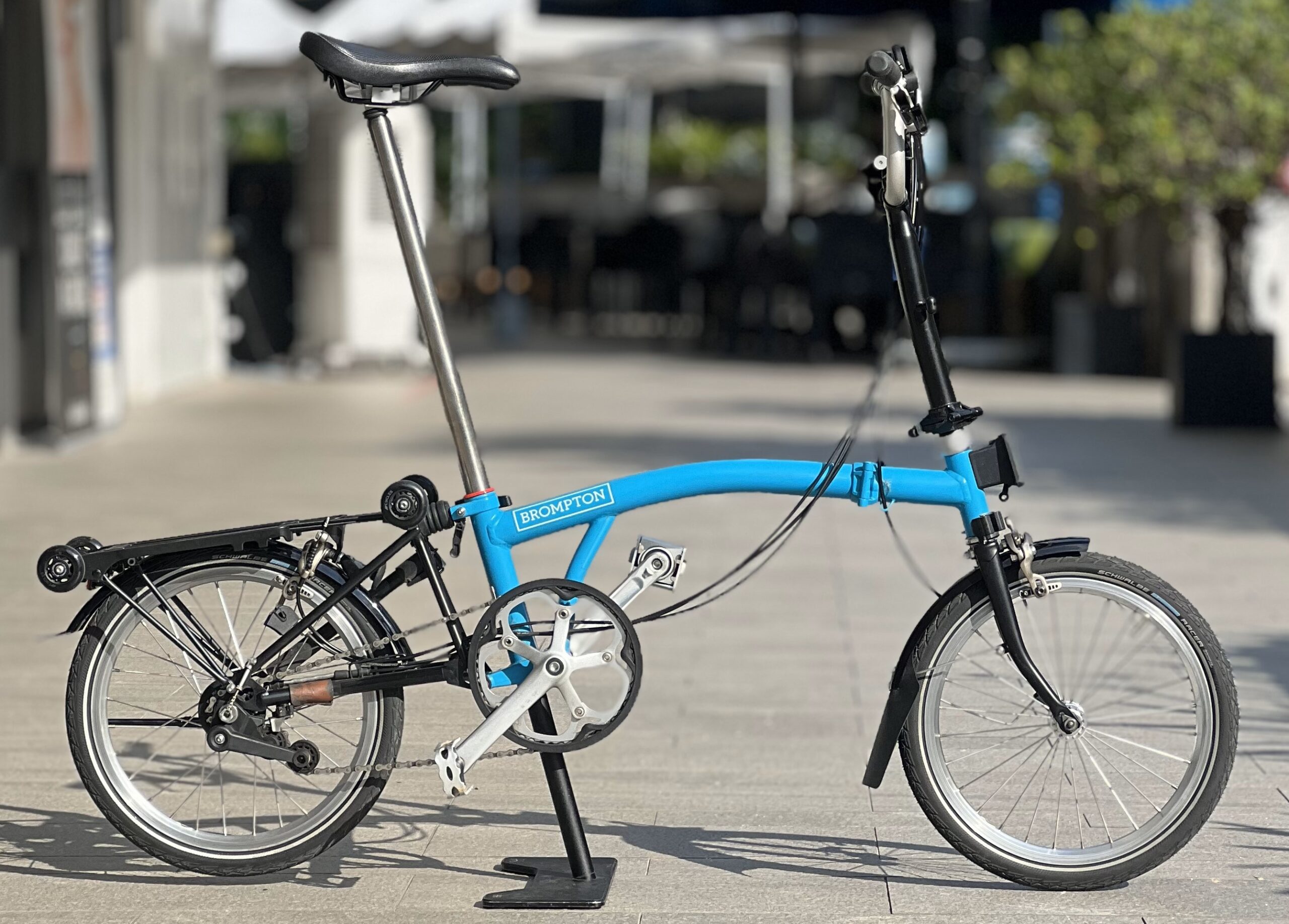
A used Brompton can be an excellent buy in Singapore. It lets you enjoy the compact fold, easy transport and long service life for less than the price of a new bicycle. But a low asking price does not always mean a bargain—especially when the bike has spent years unused in a humid storeroom, balcony or service yard.
Before paying, look beyond the paint colour and accessories. Worn tyres, hardened rim tapes, rust, drivetrain wear and unauthorised modifications can quickly turn a seemingly cheap Brompton into an expensive repair project. Use these 12 checks to judge the bike properly and budget for the work it may need.
1. Confirm that it is a genuine Brompton
Check the frame and serial numbers, and ask the seller for the original receipt or ownership history where possible. The numbers should be clear, untampered with and consistent with the bicycle being offered. Be cautious if the seller cannot explain where the bike came from, refuses to provide identifying details, or pressures you to complete the deal immediately.
A genuine, traceable bicycle is also easier to service correctly because its model year and original specification can be identified.
2. Inspect the frame, hinges and fork
Examine the main frame tube, rear frame, fork and handlebar stem under good lighting. Look for dents, cracks, ripples in the paint, deep scratches around welds or signs that damaged areas have been touched up.
Fold and unfold the bicycle several times. Both hinges should close positively, and the hinge clamps should tighten securely without needing excessive force. A small cosmetic mark is different from structural damage; if anything looks distorted or misaligned, have the bicycle inspected before buying it.
3. Look carefully for rust
Singapore’s humidity can corrode a Brompton even when it is rarely ridden. Inspect the seatpost, inside the seat tube where visible, brake-caliper bolts, chainring bolts, spoke nipples, cable fittings and other exposed steel hardware. Surface marks may be manageable, but widespread corrosion suggests long-term damp storage and may hide additional problems.
Ask where the bicycle was kept. Indoor storage in a dry room is preferable. A bike left outdoors, on a balcony or on a porch may have suffered repeated condensation and rain exposure.
4. Check tyre age, tread and sidewalls
Do not judge a tyre only by how much tread remains. Rubber hardens with age, especially when a bicycle has sat unused for years. Inspect both tyres for cracks, small pits, flat spots, exposed threads, brittle sidewalls or a shiny hardened surface.
Old tyres can have poor grip in wet conditions even if they still look “new”. If the bicycle dates from the COVID cycling boom and retains its original tyres, include replacement tyres in your budget.
5. Remember the inner tubes and rim tapes
Inner tubes and rim tapes also deteriorate with time. A hardened tube can split, while cracked or displaced rim tape can expose the tube to spoke holes and cause sudden punctures. These parts cannot be assessed fully from an exterior photograph, so assume that an older, long-unused bicycle may need fresh tubes and rim tapes.
6. Test every gear under load
A quick spin of the wheel while the bike is on a stand is not enough. Ride the bicycle safely and shift through every gear while applying moderate pedal pressure. The changes should be predictable, without hesitation, grinding or the chain jumping unexpectedly.
A gear that works during a gentle test may skip when climbing. Problems can come from adjustment, worn cables, a stretched chain, worn sprockets or incompatible aftermarket parts.
7. Inspect the chain, chainring and rear sprockets
Look for rust, stiff links and heavy dirt on the chain. Check whether the chainring teeth or rear sprocket teeth look hooked, pointed or unevenly worn. A new chain fitted to badly worn sprockets may still skip, so these components often need to be assessed as a system.
Ask what parts were previously replaced and whether original Brompton gearing components were retained. Keep this information with the bicycle’s service history.
8. Check the brakes properly
Squeeze both brake levers. They should feel firm and return smoothly. Inspect the brake pads for remaining material and even contact with the rim. Pads must not touch the tyre, and the calipers should release cleanly after braking.
Also inspect cables, housings, fixing bolts and levers for corrosion or damage. Never treat an improvised brake modification as an upgrade merely because it looks different or expensive.
9. Examine the wheels and rims
Spin each wheel and watch the rim relative to the brake pads. Side-to-side movement, rubbing, loose spokes or a pulsing brake feel may indicate that the wheel needs attention. Inspect the rim braking surfaces for excessive wear, dents and damage.
At 808 Cycles, lateral wheel truing is measured using a dial gauge and completed to ±0.05 mm as part of eligible full-service work.
10. Test the complete folding sequence
A Brompton should fold and unfold smoothly without forcing parts into position. Test the rear-frame fold, main hinge, handlebar stem, seatpost and pedal. Confirm that the folded package sits correctly and that catches, clamps and contact points operate as intended.
Difficulty folding may be caused by adjustment, damage, incompatible accessories or modifications that interfere with the original design.
11. Identify unauthorised or incompatible modifications
Modified bikes require extra care. Ask the seller for the original parts and a list of everything changed, especially brakes, gearing, wheel components and control parts. Some aftermarket combinations make diagnosis difficult and may prevent a straightforward replacement with original Brompton parts.
808 Cycles uses original Brompton gearing components for service replacements and does not support unauthorised gear conversions. If a bicycle has been substantially modified, obtain an assessment before committing to the purchase.
12. Calculate the real cost after servicing
Add the likely refurbishment cost to the asking price. A cheaper bicycle needing tyres, tubes, rim tapes, chain, sprockets, brake pads, cables and corrosion work may cost more overall than a better-maintained example.
Ask for service invoices rather than relying only on statements such as “hardly used” or “recently serviced”. Low mileage does not stop rubber from ageing or humidity from causing corrosion.
Used Brompton or new Brompton?
A carefully maintained, original-specification used Brompton can offer excellent value. It may be the right choice if its history is clear, the frame is sound and the final cost remains attractive after preventive maintenance.
A new bicycle may be the better option when the used bike has uncertain ownership, structural damage, extensive corrosion or complicated modifications. Compare the complete ownership cost, not just the advertised price.
What should you do after buying a used Brompton?
If the service history is incomplete, arrange a thorough inspection before regular riding. A full service is especially sensible for a bicycle that is more than two years old, has been stored unused or has unknown replacement parts.
An eligible 808 Cycles full service can include Continental Contact Urban tyres, Continental inner tubes, original Brompton rim tapes, an original Brompton chain and rear sprockets, general cleaning and lateral wheel truing to ±0.05 mm. Complimentary two-way bicycle transport makes the process convenient for owners across Singapore. See our Brompton servicing information for current package details.
Frequently asked questions
Is a lightly used Brompton automatically in good condition?
No. Rubber parts age even when the bicycle is not ridden, and Singapore humidity can cause corrosion during storage. Condition, storage and maintenance history matter more than mileage alone.
Should I service a used Brompton immediately after buying it?
If the history is unknown, the bike is over two years old or it has been unused for a long period, a full inspection and preventive service are recommended before frequent riding.
Are aftermarket modifications always a problem?
Not every accessory is harmful, but changes to brakes, gears and critical components must be compatible and safely installed. Unauthorised conversions can complicate repairs and may prevent direct replacement with original Brompton components.
What are the most common hidden costs?
Age-hardened tyres, inner tubes, rim tapes, worn chains and sprockets, thinning brake pads, cables, wheel work and corrosion-related replacements are common costs that buyers overlook.
Before deciding, compare the long-term cost of Brompton ownership in Singapore and learn why a bicycle that has sat unused may still need a full service.
Need a used Brompton checked in Singapore?
808 Cycles Pte. Ltd. is a Singapore Brompton Authorised Dealer. If you are considering a used bicycle—or have already bought one—WhatsApp +65 9820 8642 to arrange an assessment or convenient two-way pickup for servicing.
You can also browse more practical ownership advice in our Brompton articles.