
After a wet ride, remove road grit gently, dry your Brompton before storage and check whether the chain needs cleaning and lubrication. Keep lubricant away from braking surfaces, and investigate unusual noises or reduced braking rather than simply folding the bike away.
A small, consistent routine is easier to manage than allowing damp dirt to build up. The steps below are basic owner care, not instructions for dismantling bearings, brakes or folding joints. Your model’s current Brompton instructions take priority.
1. Get under cover and assess the bike
Find a safe place to stop before you deal with the bicycle. If conditions include lightning, flooding or other hazards, do not treat a waterproof jacket or bag as a reason to continue riding.
Once home, remove your luggage and look over the bike. Mud and gritty water can collect around wheels, mudguards and the drivetrain. If the bicycle has been submerged or you notice damage, poor braking or an electrical concern, arrange an inspection rather than assuming a wipe-down is sufficient.
2. Remove grit gently
Use a soft cloth and an appropriate bicycle-cleaning product where necessary. A damp cloth is a practical starting point for everyday splashes; use separate cloths for the greasy drivetrain and the rest of the bicycle. Avoid dragging grit repeatedly across painted surfaces.
Brompton’s maintenance guide recommends gentle cleaning and warns against high-pressure washing. There is no need to blast water into bearings or other moving parts, and especially not into the hub gear (if used on your bike model). Follow the product instructions and avoid aggressive household cleaners.
3. Dry before folding away for storage
Wipe away remaining moisture with a clean, dry cloth and let the bike dry in a sheltered, ventilated place. Pay attention to areas where water has collected rather than drying only the visible outer frame. Take extra note of rust-prone areas such as brake caliper bolts, chainring bolts, as well as the steel seatpost. Keep these areas dry. To be doubly safe, spray some WD40 onto the brake caliper bolts, chainring bolts, and hinge areas, to drive out moisture and reduce likelihood of rust. For the steel seatpost, do not spray any WD40 or grease, and just wipe dry or clean wiht a degreaser.
A wet bicycle folded tightly into a bag or tucked into a poorly ventilated corner is easy to forget, and the trapped moisture will cause rust formation. Make drying part of arriving home, before you put the bike in its usual storage position. Do not use a heater or other intense heat to speed the process. Whenever possible, store the bike in a dry environment, such as an aircon room.
4. Care for the chain without contaminating the brakes
If the chain is dirty, clean it before applying fresh lubricant. Apply suitable chain lubricant according to its instructions, allow it to work in and wipe off the excess. More oil is not a substitute for removing dirt.
Keep oil and grease away from wheel-rim braking surfaces, disc rotors and brake pads. Avoid spraying lubricant indiscriminately over the bicycle. Brompton’s cleaning instructions also caution against getting lubricant on the seatpost. If braking surfaces have been contaminated or braking has changed, seek advice before riding.
5. Follow the guidance for your exact model
A rim-brake Brompton and a disc-brake G Line do not have identical brake-cleaning requirements. Use the instructions for the components actually fitted to your bicycle rather than transferring every tip between models.
For a Brompton Electric, Brompton says to remove the battery before cleaning. Follow the specific battery and electrical-care instructions. Do not charge a wet battery or improvise drying or electrical repairs.
Know when basic care is not enough
A persistent grinding noise, gear skipping, a rubbing wheel or reduced braking needs more than another layer of lubricant. If a safety-related function does not feel right, stop using the bike and arrange a check. Describe what changed after the ride and send photographs if useful.
If the bicycle has also been stored for a long time, our unused Brompton guide explains why an inspection can be worthwhile. Current workshop and collection arrangements are on the 808 Cycles servicing page.
Keep a public-transport option in your plan
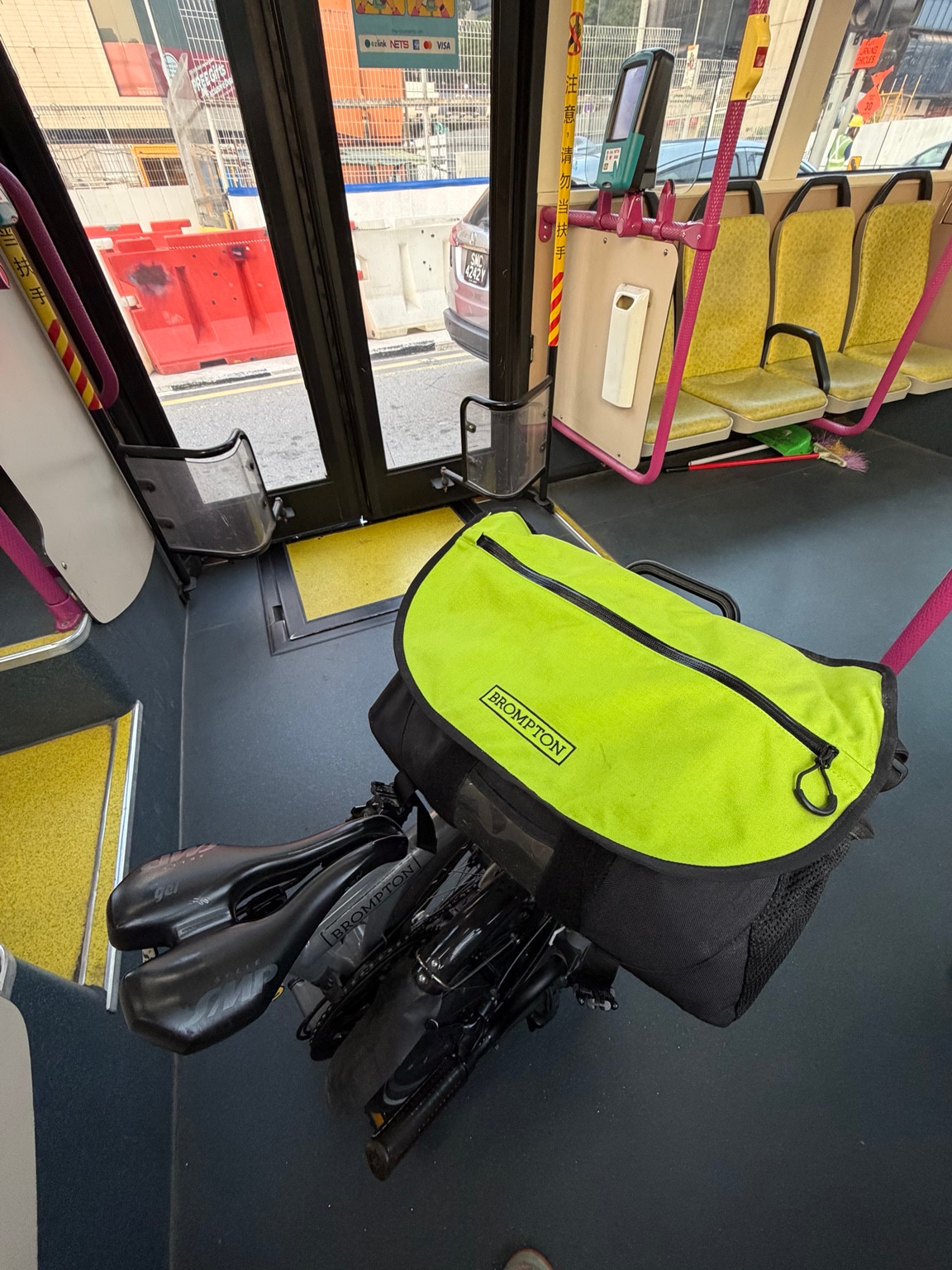
You do not have to complete every journey on the bike. Knowing how to fold and manage your Brompton on public transport makes it easier to change plans when conditions deteriorate. Read our Singapore commuting setup guide before you need that alternative.
You must be logged in to post a comment.